
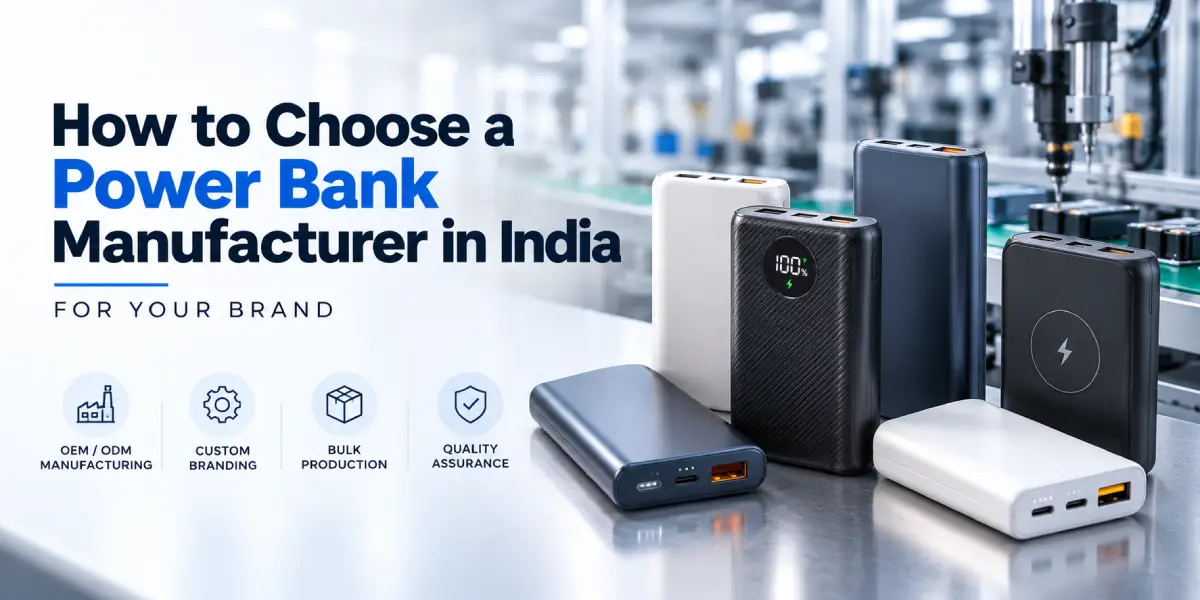
The power bank market continues to create opportunities for electronics brands looking to expand their product portfolios. Smartphones, wireless earbuds, smartwatches and other portable devices have made reliable charging solutions an important part of everyday life.
For businesses planning to launch their own power bank range, however, choosing the right manufacturing partner is one of the most important decisions. Product quality, battery performance, charging speed, safety, customization and production consistency can all influence how a product performs in the market.
Finding a suitable power bank manufacturer in India involves more than comparing product prices or selecting a design from a catalogue. Brands need to understand the manufacturer’s capabilities, evaluate technical specifications and determine whether the proposed product matches their target customers.
This guide explains the key factors businesses should consider before selecting a power bank manufacturer for OEM, private label or customized product development.
Also Read: Power Bank Manufacturers with Private Labeling: How OEM Brands Are Driving Innovation in High-Capacity Charging Solutions
1. Understand Your Power Bank Product Requirements
Before approaching a manufacturer, define the type of power bank you want to introduce.
Different customers have different charging requirements. Some prefer compact power banks for everyday use, while others look for higher capacity models, fast charging capabilities or wireless charging features.
Your product requirements will influence component selection, design, testing and manufacturing costs.
Capacity Requirements
Power bank capacity is commonly advertised in milliampere hours, or mAh.
Common capacity options include:
• 5,000 mAh for compact, portable charging solutions
• 10,000 mAh for everyday use
• 20,000 mAh for users who need more charging capacity
• Higher capacity models for specialized applications
These are common product categories rather than fixed manufacturing limits.
A higher advertised capacity does not automatically mean better performance. Actual device charging depends on factors such as battery voltage, voltage conversion losses, output power and the device being charged.
Brands should understand the difference between the battery’s rated capacity and the usable energy delivered to a connected device.
Charging Speed
Charging speed is another important consideration.
Depending on the product design, power banks may support standard USB charging, USB Power Delivery, or other fast charging technologies.
Products can be developed with different output ratings, including 10W, 18W, 22.5W, 30W, 45W and higher power levels. The appropriate rating depends on the intended devices and product positioning.
For example, a basic everyday power bank may prioritize affordability and portability, while a premium model may focus on faster charging and broader device compatibility.
Before finalizing a specification, confirm that the battery, internal electronics, ports and charging protocols support the intended performance.
Product Design and Features
Consider whether your target market requires additional features such as:
• Built in cables
• Multiple output ports
• Wireless charging
• Magnetic attachment
• LED battery indicators
• Digital percentage displays
• Compact or slim designs
• Premium metal or textured finishes
Not every feature is suitable for every product. The goal is to develop a power bank that offers the right balance of functionality, usability, appearance and cost.
2. Evaluate the Manufacturer’s Product Range
A capable power bank manufacturer should be able to explain its available product options and the specifications associated with them.
Review the manufacturer’s product range before requesting a quotation. This helps you understand whether its existing designs align with your target market or whether customization may be necessary.
Look for information about:
- Available capacity options
- Charging output and supported protocols
- Battery cell specifications
- Input and output port configurations
- Enclosure materials
- Product dimensions and weight
- Display and indicator options
- Wireless charging capabilities, where applicable
Ask for technical specifications rather than relying entirely on marketing descriptions.
For example, a product advertised as a fast charging power bank should have clearly documented input and output ratings, along with information about supported charging protocols.
Similarly, a wireless charging model should have defined wireless charging capabilities and compatibility requirements.
A clear specification sheet makes it easier to compare different manufacturers and avoid misunderstandings during product development.
3. Check Battery Cell Quality and Selection
The battery is one of the most important components of a power bank.
Battery selection influences product capacity, dimensions, weight, charging behaviour, operating temperature and overall performance.
Depending on the design, manufacturers may use lithium ion cylindrical cells, lithium polymer pouch cells or other suitable battery configurations.
Each option has different characteristics, and the right choice depends on the product’s intended use.
What Should Brands Evaluate?
When reviewing a manufacturer’s battery specifications, consider the following factors.
Rated capacity: Confirm the actual battery capacity and understand how the manufacturer calculates the advertised product capacity.
Cell consistency: Battery cells should meet defined specifications and quality requirements. Consistency is important when developing products in bulk.
Safety documentation: Request relevant test reports and documentation for the selected cells and finished product.
Battery protection: The design should include appropriate protection measures for the intended application.
Traceability: Ask whether the manufacturer can identify the battery components and suppliers used in a particular product batch.
Brands should avoid choosing a power bank solely because it advertises a higher mAh rating at a lower price.
The quality of the battery, supporting electronics and complete product design all contribute to the user experience.
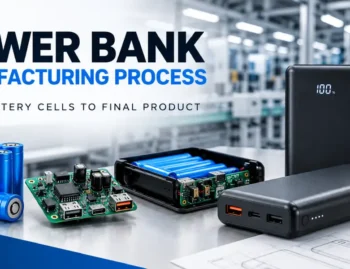
Also Read: Power Bank Manufacturing Process: From Battery Cells to Final Product
4. Understand the Importance of Battery Management and Protection
A power bank is not simply a battery placed inside an enclosure. It requires electronic circuitry to manage charging, discharging and power delivery.
The battery management and protection design should be appropriate for the selected cells and the product’s intended operating conditions.
Depending on the design, protection functions may address:
- Overcharging
- Excessive discharge
- Overcurrent
- Short circuits
- Abnormal operating temperatures
- Other relevant electrical fault conditions
The exact protection architecture depends on the battery chemistry, circuit design and applicable product requirements.
Brands should ask manufacturers how these functions are implemented and verified during product testing.
It is also important to understand how the power bank behaves when connected to different chargers and devices.
A properly designed product should operate within its defined limits and provide consistent performance under its intended conditions.
5. Review Quality Testing and Inspection Procedures
Quality testing should be an essential part of the power bank manufacturing process.
A product may look premium and have attractive specifications, but its real value depends on whether it performs consistently and meets applicable safety requirements.
Before selecting a power bank manufacturer, ask about the checks performed during component inspection, assembly and final product evaluation.
Component Inspection
Incoming components may be checked against approved specifications before they are used in production.
Depending on the product, this may include battery cells, printed circuit boards, connectors, cables, switches, displays and enclosure materials.
Functional Testing
Functional testing helps confirm that the power bank operates as intended.
Checks may include charging input, output operation, indicator behaviour, port functionality and supported charging modes.
Capacity and Performance Testing
Capacity and performance testing help verify whether the product meets its defined requirements.
Brands should understand the test conditions and measurement methods used, particularly when comparing advertised capacity with usable output.
Protection Testing
Protection related testing evaluates whether the product responds appropriately to defined fault conditions.
The applicable test programme should be determined by the product design and relevant standards.
Mechanical and Visual Inspection
Mechanical and visual checks can identify issues such as loose connectors, enclosure defects, inconsistent assembly, damaged surfaces or incorrect labelling.
These details matter because they influence both product reliability and customer perception.
Final Quality Control
A documented final inspection process helps identify defects before products are packed and dispatched.
When evaluating a manufacturer, ask which checks are performed on every unit and which tests are conducted on a sampling basis.
A clear quality control process is more useful than a general statement that the manufacturer follows high quality standards.
Also Read: Power Bank Manufacturing & Quality Guide
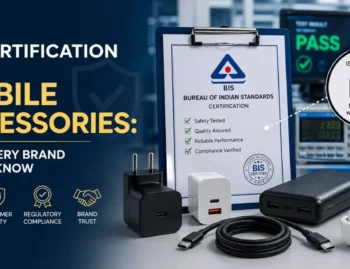
6. Check BIS Certification and Regulatory Requirements
Compliance is an important consideration when developing power banks for the Indian market.
Before placing a product on the market, brands should verify which certification, registration, safety and labelling requirements apply to the specific product and its components.
Power banks are included in the relevant Indian electronics product certification framework. The applicable standard and registration requirements should be confirmed against the latest official notifications and product category.
Do not assume that a certificate for one model automatically covers every product from the same manufacturer.
Registration scope, model details, brand information and manufacturing arrangements may affect what documentation is required.
Ask the manufacturer to clarify:
- Which applicable standards cover the product
- Whether the proposed model is covered by the required registration
- Which battery cell documentation is available
- Whether product labels and markings meet applicable requirements
- What documentation will be needed for the intended brand and market
- Whether any additional obligations apply to the business importing or selling the product
You can consult the official Bureau of Indian Standards website to review applicable product certification requirements.
Certification should be verified for the actual product and intended arrangement. Avoid relying on verbal assurances or certificates that cannot be matched to the relevant product details.
7. Evaluate OEM and Private Label Manufacturing Options
Businesses generally have different requirements when launching their own power bank products.
Some want to use an existing product design with their own branding. Others need changes to the appearance, specifications or packaging.
Understanding the available manufacturing models can help you choose the right approach.
OEM Power Bank Manufacturing
OEM manufacturing can involve producing a product according to agreed specifications, designs and requirements.
Depending on the project, a brand may specify the capacity, output ratings, connector configuration, enclosure design, materials and other technical details.
This approach can be suitable for businesses that have a defined product concept and need a manufacturing partner to produce it.
Private Label Power Banks
Private label manufacturing is often a practical option for businesses that want to launch a product under their own brand without developing every element from scratch.
An existing product design may be adapted with the brand’s logo, packaging and agreed customization options.
The available modifications depend on the manufacturer’s product range and production capabilities.
Customized Power Bank Development
Customization can go beyond branding.
Depending on feasibility, businesses may request changes to enclosure colours, surface finishes, dimensions, connector arrangements, displays, packaging or other product features.
More substantial changes may require engineering work, tooling, additional testing or longer development timelines.
Before approving a customized product, confirm the final specifications, sample approval process, costs and expected production schedule.
Also Read: Power Bank Manufacturing: How OEM Brands Can Lead the Portable Charging Market
8. Ask About MOQ, Pricing and Production Capacity
Commercial terms can have a significant impact on a new product launch.
Before selecting a manufacturer, understand the minimum order quantity, pricing structure and production capacity associated with your chosen power bank.
Minimum Order Quantity
Minimum order quantity, or MOQ, is the smallest order a manufacturer is willing to accept under defined conditions.
MOQ may vary according to the product design, customization requirements, packaging, components and production process.
For example, an existing design with simple branding may have different requirements from a product involving a new enclosure or customized internal components.
Ask whether the MOQ applies to each model, colour, capacity or complete order.
Understanding the Quotation
Compare quotations carefully rather than evaluating only the unit price.
Check whether the quotation includes:
- The specified battery capacity
- Agreed charging output
- Branding and packaging
- Required testing and documentation
- Customization charges
- Tooling costs, if applicable
- Shipping and other commercial terms
Two products with similar appearances may use different components or have different performance capabilities.
A meaningful comparison requires matching specifications.
Production Capacity and Lead Time
Ask about the manufacturer’s ability to meet your expected order volume and delivery schedule.
For repeat orders, consider whether the manufacturer can maintain consistent specifications and communicate changes that may affect the product.
If you are launching multiple models, ask how production planning will work across the product range.
The objective is to select a partner whose capabilities match your current requirements and potential future growth.
9. Review Custom Branding and Packaging Capabilities
For a private label business, the power bank is only one part of the finished product.
Branding and packaging help create a consistent identity across the product range.
Depending on the manufacturer’s capabilities, customization may include:
Logo application: The logo placement, size, colour and method should be approved before bulk production.
Product colours: Brands may choose from available colours or explore custom colour options, subject to feasibility and order requirements.
Surface finish: Matte, glossy, metallic and textured finishes can create different visual impressions.
Retail packaging: Packaging should protect the product while presenting the brand clearly.
Product information: Capacity, input and output ratings, compatibility details and other required information should be accurate and consistent with the final specification.
Documentation: Manuals, warranty information and other product inserts should match the product and intended market.
Request a physical sample or an approved preproduction sample where appropriate.
Review the finished product, branding and packaging together before authorizing a bulk order.
10. Assess Communication and Project Management
Manufacturing is a collaborative process. A manufacturer may offer a suitable product, but poor communication can create delays and confusion.
Before placing an order, evaluate how clearly the team responds to technical and commercial questions.
A dependable manufacturing process should include clear communication about specifications, samples, revisions, production schedules and quality expectations.
It should also be clear who is responsible for approving product changes and resolving issues.
For customized products, written specifications are particularly important. Verbal discussions alone can leave room for misunderstandings about capacity, output ratings, materials, packaging or branding.
A documented approval process helps both parties work toward the same finished product.
11. Common Mistakes to Avoid When Selecting a Power Bank Manufacturer
Businesses can reduce product development risks by avoiding a few common mistakes.
Choosing Only on Price
A lower quotation may appear attractive, but the complete specification must be evaluated before comparing costs.
Battery quality, charging performance, testing, packaging and compliance can affect the overall value of the product.
Ignoring Product Samples
A product sample helps businesses assess the design, usability, finish and visible build quality before committing to bulk production.
Where appropriate, request samples that match the proposed production specification.
Accepting Unclear Capacity Claims
Ask how the advertised capacity is measured and what performance information is available.
Avoid comparing power banks solely on the number printed on the packaging.
Overlooking Compliance
Confirm the applicable requirements for the specific product, components and target market before production and sale.
Do not assume that a manufacturer’s existing documentation covers every model or brand arrangement.
Making Last Minute Changes
Changes to a product’s components, appearance or specifications after approval can affect costs, timelines and testing requirements.
Finalize important decisions before bulk production wherever possible.
Failing to Document Specifications
Maintain an approved specification sheet covering the product’s key technical and commercial details.
This creates a reference point for sampling, production, inspection and repeat orders.
12. How SigmaVizin Supports Power Bank Manufacturing for Brands
For businesses planning to introduce power banks under their own brand, SigmaVizin Electronics Pvt. Ltd. offers an electronics manufacturing partnership focused on product requirements, customization and business needs.
The right manufacturing approach depends on the intended product, target market, technical specifications and expected order volume.
Businesses exploring power bank manufacturing can discuss requirements such as capacity options, charging performance, product design, branding, packaging and bulk production planning.
For a private label project, the process can begin with identifying a suitable product design and defining the customization requirements.
For a more specific product concept, the discussion can focus on the intended features, technical specifications, feasibility and development requirements.
Before proceeding with production, businesses should establish the agreed specifications, sample approval process, testing expectations and applicable compliance requirements.
This structured approach helps create a clearer path from product selection to manufacturing.
SigmaVizin also operates in the wider electronics manufacturing space, allowing businesses exploring multiple product categories to discuss their requirements with a manufacturing partner familiar with consumer electronics products.
To learn more about the company’s capabilities and product range, visit the official SigmaVizin website.
13. A Practical Checklist Before Finalizing Your Manufacturer
Before confirming a power bank manufacturer in India, use the following checklist.
| Evaluation Area | What to Confirm |
| Product specifications | Capacity, input, output and supported charging protocols |
| Battery | Cell specifications, documentation and traceability |
| Protection | Suitable protection features for the product design |
| Testing | Functional, electrical and relevant safety testing |
| Compliance | Applicable registrations, standards and documentation |
| Customization | Branding, colour, enclosure and packaging options |
| MOQ | Minimum order requirements for each model |
| Pricing | Complete quotation based on an agreed specification |
| Sampling | Sample availability and approval process |
| Production | Capacity, lead times and repeat order planning |
| Quality control | Inspection procedures and defect handling |
| Communication | Clear documentation and project responsibilities |
A manufacturer should be able to explain its capabilities and identify which requirements can be met for your particular product.
If important information remains unclear, resolve it before committing to production.
Also Read: Leading Power Bank Manufacturing in India
Conclusion
Choosing the right power bank manufacturer in India requires a balanced evaluation of product quality, battery specifications, charging performance, safety, customization and manufacturing capabilities.
For new and established electronics brands, the most suitable partner is not necessarily the one offering the lowest price. It is the one that can meet the agreed product requirements, communicate clearly and support a consistent manufacturing process.
Start by defining your target market and product specifications. Evaluate samples, verify relevant documentation, compare quotations on a like for like basis and confirm the commercial terms before placing a bulk order.
Whether you are launching a basic charging model, a fast charging power bank or a customized private label range, a well planned manufacturing process can help establish a stronger foundation for your product business.
Frequently Asked Questions
1. How do I choose a power bank manufacturer in India?
Evaluate the manufacturer’s product specifications, battery documentation, testing procedures, applicable certifications, customization options, MOQ, production capacity and quality control process. Request samples and confirm the complete specification before placing an order.
2. Can I manufacture power banks under my own brand?
Yes. Depending on the manufacturer’s capabilities, businesses can explore private label power banks with their own logo, packaging and selected customization options. More extensive changes may require additional development and testing.
3. What is the difference between OEM and private label power banks?
OEM manufacturing generally involves producing a product according to agreed specifications and requirements. Private label manufacturing often involves selling an existing or adapted product under your own brand. The exact scope depends on the manufacturing arrangement.
4. What power bank capacity should a brand choose?
The appropriate capacity depends on the target customer, intended use, product dimensions, weight, cost and charging requirements. Common options include 5,000 mAh, 10,000 mAh and 20,000 mAh. Brands should also consider usable energy and actual charging performance.
5. Is BIS certification important for power banks in India?
Yes. Power banks fall within India’s applicable product certification framework. Businesses should verify the current requirements, relevant standard, registration scope and documentation for the specific model before manufacturing, importing or selling it.
6. What information should I provide when requesting a power bank manufacturing quotation?
Provide your desired capacity, charging output, product design, connector requirements, branding and packaging preferences, estimated order quantity and target market. This helps the manufacturer assess feasibility and prepare a more relevant quotation.
7. Does SigmaVizin support private label power bank manufacturing?
SigmaVizin Electronics Pvt. Ltd. works with businesses exploring electronics manufacturing and customized product requirements. Contact the company to discuss your proposed power bank specifications, branding requirements, order volume and project feasibility.