
How Quality Mobile Accessories Are Designed, Manufactured, Tested and Delivered
The mobile accessories industry has become one of the fastest-growing segments within consumer electronics. As smartphones continue to evolve, the demand for reliable chargers, power banks, data cables, TWS earbuds and other accessories continues to increase.
For consumers, a mobile accessory may appear to be a simple product. However, behind every high-quality charger or data cable is a detailed manufacturing process involving product engineering, component selection, assembly, testing and quality control.
For brands entering the electronics market, understanding the mobile accessories manufacturing process helps in selecting the right manufacturing partner and ensuring consistent product quality.
This guide takes a closer look at how modern mobile accessories are manufactured and the key stages involved in transforming an idea into a finished product.
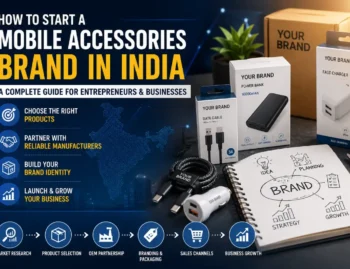
Also Read: How to Start a Mobile Accessories Brand in India
Why Manufacturing Quality Matters
The success of any mobile accessory depends on its quality, safety and performance.
A well-manufactured product offers:
- Reliable performance
- Better durability
- Consistent charging efficiency
- Improved customer satisfaction
- Lower return rates
Poor manufacturing practices often result in:
- Product failures
- Safety concerns
- Customer complaints
- Damage to brand reputation
This is why manufacturing quality plays a critical role in the long-term success of any mobile accessories brand.
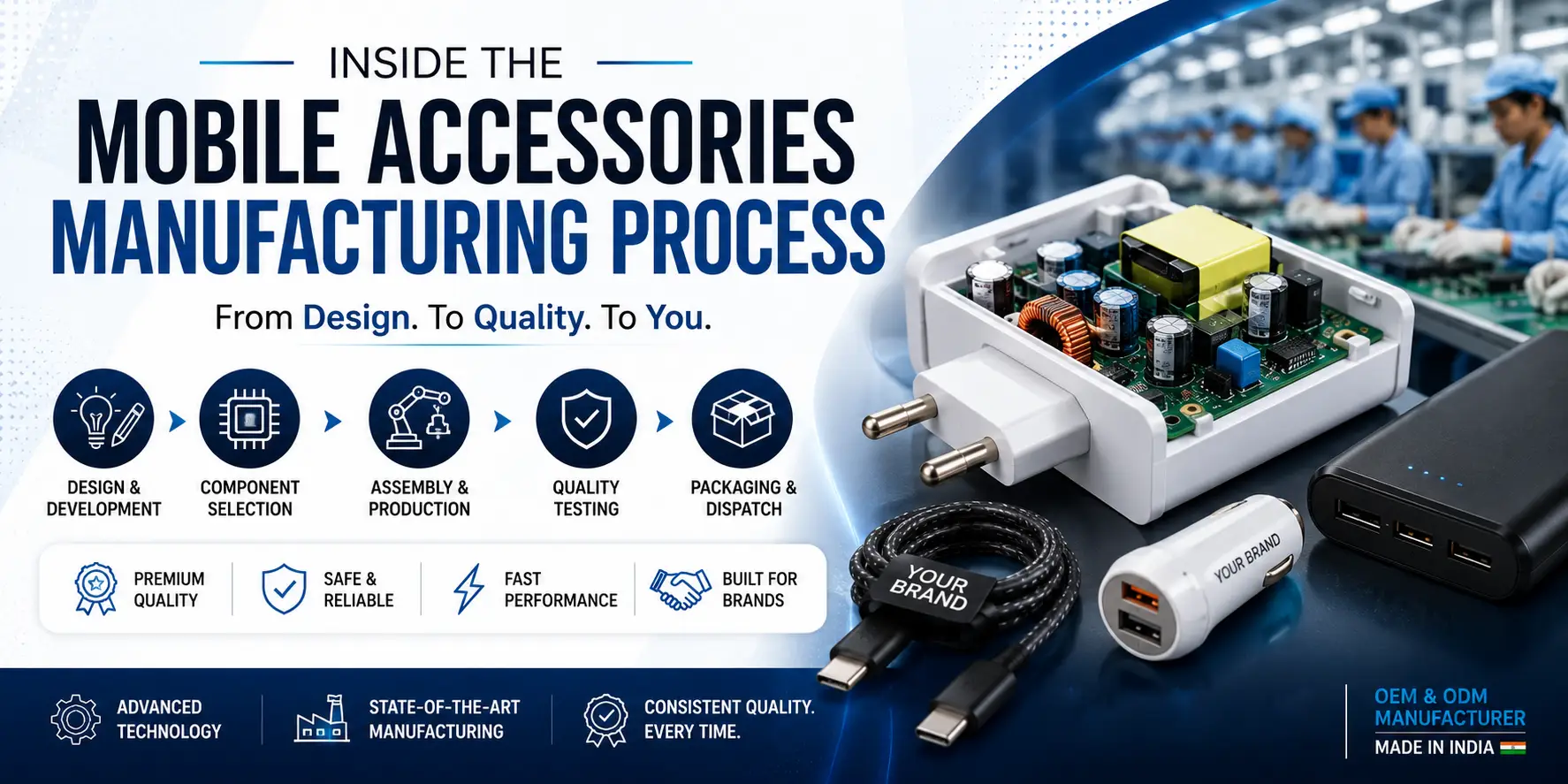
Stage 1: Product Planning and Design
Every product begins with a concept.
Before manufacturing starts, businesses and manufacturers define:
- Product specifications
- Features
- Performance requirements
- Target market expectations
- Design objectives
For example, a power bank may require:
- Fast charging support
- Multiple output ports
- Compact design
- Specific battery capacity
The planning stage helps ensure that the final product aligns with market demand.
Stage 2: Component Selection
The quality of a mobile accessory depends heavily on the quality of its components.
Different products require different materials and parts.
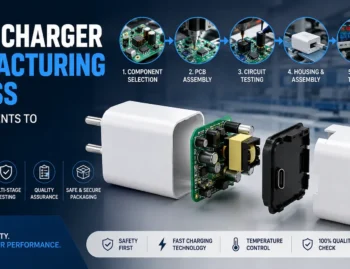
For Chargers
Common components include:
- PCB boards
- Capacitors
- Transformers
- Charging controllers
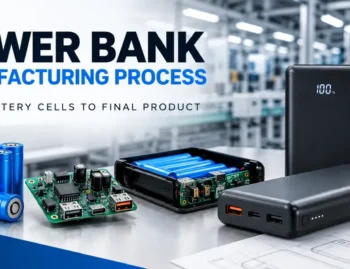
For Power Banks
Key components include:
- Battery cells
- Protection circuits
- Power management systems
- Output modules
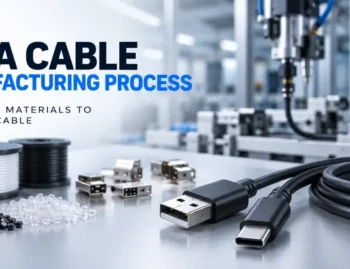
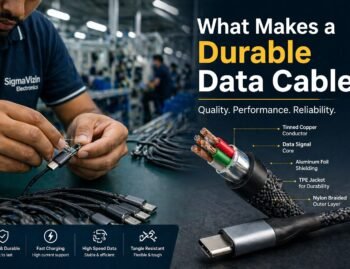
For Data Cables
Important materials include:
- Copper conductors
- Shielding layers
- Connectors
- Outer jacket materials
Selecting reliable components is essential for product durability and performance.
Stage 3: PCB Assembly and Electronics Integration
For products such as chargers and power banks, printed circuit boards (PCBs) form the core of the device.
During this stage:
- Electronic components are placed on PCB boards
- Soldering processes are completed
- Circuit functionality is verified
Modern production facilities often use automated assembly systems to improve accuracy and consistency.
The quality of PCB assembly directly affects product performance and safety.
Stage 4: Product Assembly
Once electronic components are prepared, the product moves to the assembly stage.
Different products follow different assembly workflows.
Charger Assembly
The internal charging circuit is installed inside the housing, followed by connector integration and safety verification.
Power Bank Assembly
Battery cells, PCB modules and housing components are assembled together before charging tests begin.
Data Cable Assembly
Connectors are attached to conductors, followed by insulation, protective covering and finishing processes.
At this stage, attention to detail is critical because even small assembly errors can affect product reliability.
Stage 5: Quality Control and Testing
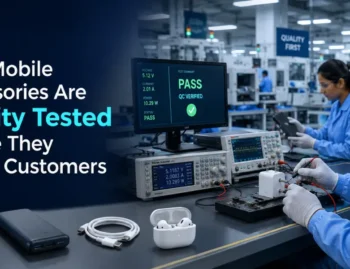
Testing is one of the most important stages in the manufacturing process.
Reliable manufacturers conduct multiple inspections throughout production.
Common tests include:
Performance Testing
Ensures the product performs according to specifications.
Safety Testing
Verifies protection against overheating, overcharging and short circuits.
Durability Testing
Evaluates resistance to wear, bending and daily usage.
Charging Efficiency Testing
Measures charging performance and power delivery consistency.
Visual Inspection
Ensures the finished product meets quality standards.
Testing helps identify potential issues before products reach the market.
Also Read: Private Label Mobile Accessories: Complete Guide for Brands
How SigmaVizin Approaches Quality Manufacturing
As a B2B-focused OEM and ODM manufacturer, SigmaVizin Electronics Pvt. Ltd. follows a structured approach to mobile accessories manufacturing.
The manufacturing process emphasizes:
- Quality component selection
- Defined production workflows
- Consistent quality inspections
- Product performance testing
- Scalable manufacturing systems
By focusing on manufacturing discipline and quality assurance, SigmaVizin supports brands looking to build reliable product lines in categories such as chargers, power banks, data cables and other mobile accessories.
For businesses, consistency in manufacturing is just as important as product innovation.
Why Brands Choose SigmaVizin for Mobile Accessories Manufacturing
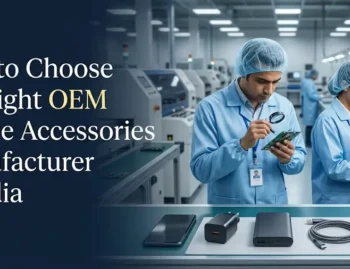
Choosing the right manufacturing partner is one of the most important decisions for any brand entering the mobile accessories market. Beyond production capacity, businesses need a partner that can consistently deliver quality, support customization and scale alongside growing demand.
SigmaVizin Electronics Pvt. Ltd. works with brands looking for reliable OEM and ODM manufacturing solutions across multiple product categories, including mobile chargers, power banks, data cables, TWS earbuds and other electronic accessories.
What differentiates SigmaVizin is its focus on structured manufacturing processes, quality-driven production and long-term business relationships. From component selection and product assembly to testing and final inspection, every stage follows defined quality standards designed to ensure consistency across production batches.
As a mobile accessories manufacturer in India, SigmaVizin also supports businesses with product customization, private label manufacturing and scalable production capabilities. This enables brands to launch products more efficiently while maintaining quality and reliability in a competitive market.
For businesses seeking a manufacturing partner rather than just a supplier, SigmaVizin aims to provide the operational support and manufacturing expertise needed for long-term growth.
Stage 6: Packaging and Branding
After products pass quality checks, they move to packaging.
Packaging serves multiple purposes:
- Product protection
- Brand visibility
- Customer experience
- Retail presentation
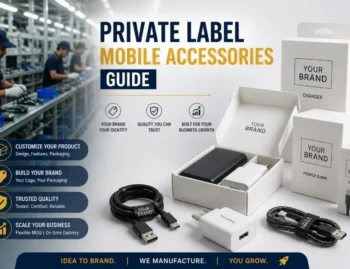
For private label brands, packaging customization is often an important part of product differentiation.
Manufacturers work closely with brands to ensure packaging aligns with branding requirements.
Stage 7: Final Inspection and Dispatch
Before products leave the manufacturing facility, final inspections are performed.
This stage verifies:
- Product functionality
- Packaging quality
- Quantity accuracy
- Shipment readiness
Only after completing final verification are products prepared for dispatch.
This process helps reduce delivery issues and improves overall customer satisfaction.
The Role of Automation in Modern Manufacturing
Manufacturing technologies continue to evolve.
Today, many production facilities incorporate:
- Automated assembly systems
- Precision testing equipment
- Digital quality monitoring
- Production tracking systems
Automation improves consistency while reducing production errors.
As demand for electronics grows, automation will continue to play a larger role in manufacturing efficiency.
Common Manufacturing Challenges
Manufacturers face several challenges during production.
These include:
- Component sourcing
- Quality consistency
- Technology upgrades
- Production scalability
- Supply chain management
Businesses should work with manufacturers that have systems in place to address these challenges effectively.
Why the Right Manufacturing Partner Matters
Even the best product idea can fail if manufacturing quality is poor.
A reliable manufacturing partner provides:
- Consistent quality
- Product customization
- Scalable production
- Technical expertise
- Long-term support
For brands, choosing the right partner is one of the most important decisions in the product development process.
Future of Mobile Accessories Manufacturing
The future of mobile accessories manufacturing is being shaped by:
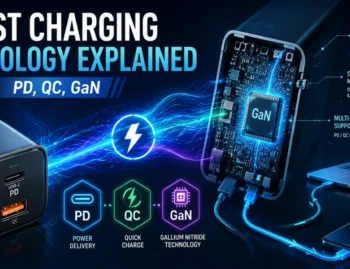
- Fast charging technologies
- Smart electronics
- Improved battery systems
- Sustainable materials
- Automation and AI-driven production
Manufacturers that adapt to these changes will be better positioned to support the next generation of electronics brands.
Also Read: Best OEM Electronics Manufacturing Partners for Businesses in India
Final Thoughts
Mobile accessories manufacturing involves much more than simply assembling products.
From product planning and component selection to testing, packaging and quality control, every stage contributes to the final product experience.
For businesses entering the market, understanding the manufacturing process helps in making informed decisions and selecting the right production partner.
As the industry continues to evolve, manufacturers that prioritize quality, consistency and innovation will play a key role in shaping the future of mobile accessories.
Frequently Asked Questions
What is the mobile accessories manufacturing process?
The process includes product planning, component selection, assembly, testing, packaging and final quality inspection before products are shipped.
Why is quality testing important in mobile accessories manufacturing?
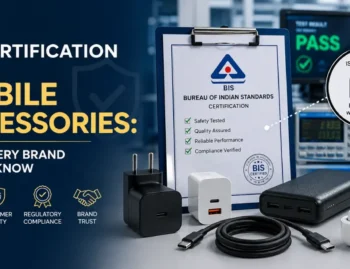
Quality testing helps ensure safety, performance, durability and compliance with product standards.
What products are commonly manufactured through OEM partnerships?
Popular categories include chargers, power banks, data cables, TWS earbuds and other mobile accessories.
How does SigmaVizin support mobile accessories manufacturing?
SigmaVizin Electronics provides OEM and ODM manufacturing support through structured production processes, quality testing systems and scalable manufacturing capabilities.
Why is choosing the right manufacturer important?
A reliable manufacturer helps maintain product quality, reduce operational risks and support long-term business growth.