
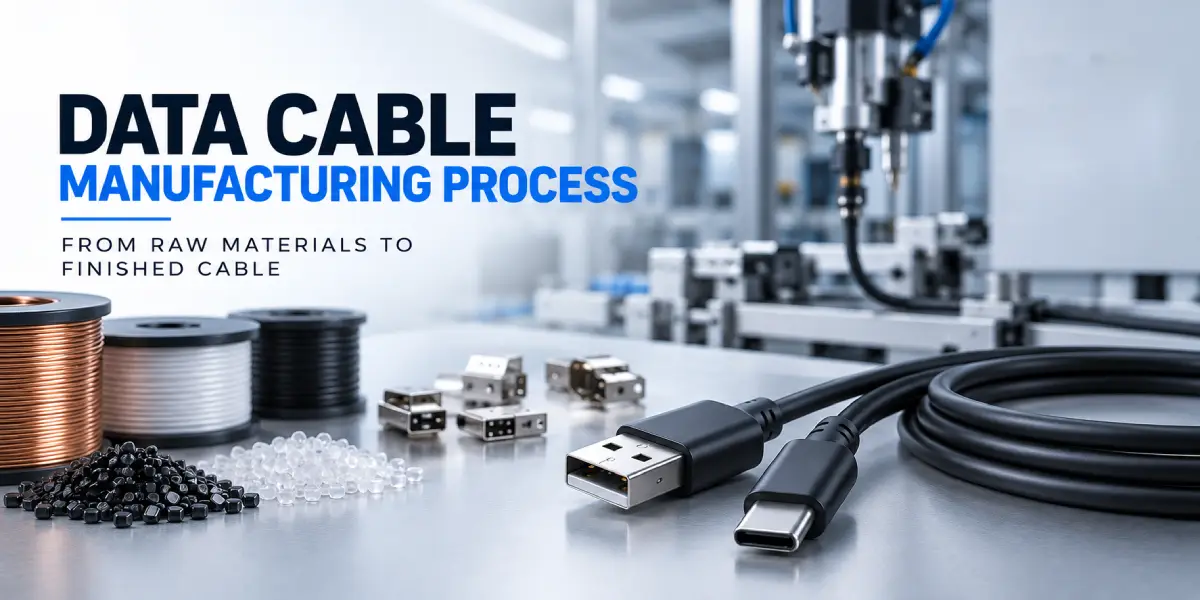
Data cables have become an essential part of everyday electronics. They are used for charging smartphones, transferring data, connecting devices, powering accessories and supporting different USB standards. While a finished cable may look like a simple product, its manufacturing process involves several carefully controlled stages.
The performance of a data cable depends on much more than its outer appearance. The quality of the conductor, insulation, connectors, shielding, internal connections and outer jacket can all influence charging performance, data transfer, durability and overall reliability.
For businesses planning to launch their own branded cables, understanding the Data Cable Manufacturing Process can make it easier to select the right specifications and manufacturing partner.
This guide explains how a data cable is developed and manufactured, from raw material selection to final testing and packaging.
Also Read: Mobile Charger Manufacturing Process: From Components to Final Product
What Is a Data Cable?
A data cable is designed to perform one or both of two primary functions: power delivery and data transmission.
Depending on its design and specification, a cable may support:
- Charging
- Data transfer
- High speed data communication
- Fast charging
- Device connectivity
- Power and data simultaneously
Modern cables are available in different configurations, including USB A to Type C, Type C to Type C, USB A to Micro USB and other connector combinations.
The internal construction of each cable can vary depending on its intended use and performance requirements.
For brands, choosing the right cable design starts with understanding the expected use case, supported devices, charging requirements, data speed, length, and target market.
Stage 1: Defining Product Specifications
Before manufacturing begins, the required product specifications are finalized.
This stage determines what the finished cable needs to deliver and how it will be constructed.
Important specifications may include:
- Cable type
- Connector type
- Cable length
- Charging capability
- Data transfer capability
- Conductor material
- Outer jacket material
- Braiding requirements
- Color
- Branding
- Packaging
For example, a basic charging cable and a high speed USB Type C data cable can have very different internal designs.
Clear specifications help the manufacturer select appropriate materials and establish the correct production process.
For OEM and private label projects, brands can also define the appearance, packaging, color, connector design, and other product requirements at this stage.
Stage 2: Conductor Selection
The conductor is one of the most important components inside a data cable.
It carries electrical signals and power between connected devices.
Copper is commonly used because of its electrical conductivity and suitability for cable applications.
Depending on the cable design, manufacturers may use different conductor structures and wire configurations.
During material inspection, manufacturers can evaluate factors such as:
- Conductor dimensions
- Material consistency
- Electrical characteristics
- Flexibility
- Surface condition
- Batch consistency
The conductor needs to match the intended electrical requirements of the product.
For high performance cables, conductor selection becomes particularly important because charging and data transmission depend on reliable electrical pathways.
Stage 3: Internal Wire Arrangement
A data cable contains multiple internal wires, and each wire can perform a different function.
Depending on the cable design, internal conductors may be used for:
- Power
- Ground
- Data transmission
- Signal communication
The number and arrangement of conductors depend on the cable standard and intended functionality.
During production, these wires are arranged according to the approved cable design.
Correct internal arrangement is essential because incorrect connections can result in charging problems, unstable data transmission, or complete product failure.
Stage 4: Insulation
After the internal conductors are prepared, they need to be properly insulated.
Insulation separates individual conductors and helps prevent unwanted electrical contact.
The insulation material also contributes to the flexibility and durability of the cable.
A well designed insulation layer helps protect internal conductors against:
- Electrical contact between wires
- Mechanical stress
- Moisture exposure
- Repeated bending
The thickness and material depend on the cable design and performance requirements.
Stage 5: Shielding
Some data cables include shielding layers designed to reduce electromagnetic interference and protect signal integrity.
Shielding becomes particularly relevant for cables designed for reliable data communication.
Depending on the construction, shielding can involve conductive materials placed around internal signal wires.
The purpose is to reduce unwanted interference that could affect communication between connected devices.
Not every cable uses the same shielding structure. The appropriate design depends on the intended application and technical requirements.
Stage 6: Connector Selection and Preparation
Connectors are the parts of the cable that physically connect to electronic devices.
Common connector types include:
- USB Type C
- USB A
- Micro USB
- Other device specific connectors
Connector quality is important because it affects both electrical connectivity and mechanical durability.
Before assembly, connectors are inspected for:
- Physical condition
- Contact quality
- Dimensions
- Alignment
- Surface finish
- Compatibility with the intended cable design
For OEM products, connector selection can also be based on the target device ecosystem and product specifications.
Stage 7: Cable Assembly
Once the internal wires and connectors are prepared, they are assembled together.
The conductors are connected to the appropriate connector contacts according to the cable design.
This stage requires controlled production because incorrect wiring can affect both charging and data transmission.
Assembly may include:
- Wire preparation
- Connector positioning
- Electrical connection
- Soldering or approved joining methods
- Connection inspection
- Strain relief installation
After the connections are completed, the assembly is checked before moving to the outer finishing stage.
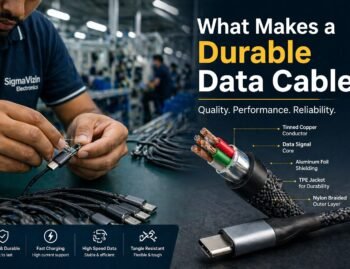
Also Read: What Makes a Durable High-Quality Data Cable?
Stage 8: Soldering and Connection Inspection
Electrical connections between the cable conductors and connectors need to remain stable during regular use.
Soldering quality can therefore have a direct impact on cable reliability.
During inspection, manufacturers may check:
- Connection strength
- Solder quality
- Contact alignment
- Loose connections
- Electrical continuity
Poor connections can result in intermittent charging, unstable data transfer, or complete failure.
For this reason, connection inspection is an important part of the manufacturing process.
Stage 9: Strain Relief and Connector Protection
The areas around the connectors experience significant mechanical stress during everyday use.
Every time a user bends or pulls a cable near its connector, the internal wires can experience stress.
Strain relief is designed to reduce this stress and protect the connection between the cable and connector.
The design can vary depending on the product.
A cable intended for frequent daily use may require a stronger strain relief structure compared with a basic low usage cable.
Stage 10: Outer Jacket Application
After the internal cable structure is completed, an outer protective layer is added.
The outer jacket protects the internal conductors while also determining the cable’s appearance and flexibility.
Common jacket materials vary depending on the product design.
Manufacturers may produce cables with:
- Standard flexible jackets
- Reinforced jackets
- Braided outer coverings
- Premium textured finishes
The outer layer needs to provide an appropriate balance between flexibility, protection, and appearance.
For branded products, this is also an opportunity to differentiate the product through colors, textures, and design.
Stage 11: Braided Cable Manufacturing
Braided data cables have become popular because of their appearance and perceived durability.
Instead of relying only on a conventional outer jacket, braided cables use an additional woven covering around the cable.
The braiding process involves wrapping textile or synthetic fibers around the cable structure.
A well constructed braided cable should maintain flexibility while protecting the internal cable from everyday wear.
For brands targeting premium customers, braided construction can also contribute to the overall product experience.
Stage 12: Charging Performance Testing
Once the cable is assembled, it undergoes electrical testing.
Charging performance is evaluated according to the intended product specifications.
Testing can include:
- Power delivery
- Voltage behavior
- Current handling
- Connection stability
- Charging consistency
For fast charging cables, testing becomes particularly important because the cable must support the required power level.
A cable should be tested with compatible chargers and devices to verify that its intended charging performance is achieved.
Stage 13: Data Transfer Testing
A cable designed for data transmission needs to be tested for communication performance.
Testing may evaluate whether devices can reliably communicate through the cable.
Depending on the cable specification, manufacturers can evaluate:
- Data connection stability
- Transfer performance
- Signal reliability
- Device compatibility
A cable that charges correctly but cannot reliably transfer data should not be marketed as a full data cable.
This is why product functionality needs to be tested according to the actual specifications.
Stage 14: Bend and Durability Testing
Data cables are frequently bent, twisted, pulled, and transported.
Durability testing helps manufacturers understand how the cable performs under repeated mechanical stress.
A controlled bend test can evaluate:
- Internal conductor durability
- Connector strength
- Outer jacket performance
- Strain relief
- Connection stability
Repeated movement around the connector is particularly important because this is one of the areas most exposed to everyday stress.
The exact testing method depends on the product requirements and manufacturer’s quality procedures.
Stage 15: Connector Insertion Testing
Connectors are repeatedly inserted and removed during normal use.
Manufacturers can perform controlled insertion and removal testing to evaluate mechanical durability.
This helps assess:
- Connector stability
- Contact reliability
- Mechanical wear
- Connection consistency
For a product intended for frequent everyday use, connector durability can have a significant impact on the overall user experience.
Stage 16: Final Quality Inspection
After electrical and mechanical testing, the finished cables undergo final inspection.
Quality teams may check:
- Cable length
- Connector alignment
- Surface finish
- Jacket quality
- Branding
- Electrical functionality
- Data performance
- Packaging readiness
Any product that does not meet the approved specifications can be separated for further evaluation.
Final inspection helps maintain consistency across production batches.
Also Read: India’s Leading Data Cables Manufacturer and Supplier
How SigmaVizin Supports Data Cable Manufacturing
For brands developing their own cable product range, selecting the right manufacturing partner can influence product quality, customization and scalability.
SigmaVizin supports businesses with data cable manufacturing and private label solutions based on their product and branding requirements.
The manufacturing process can include material selection, cable assembly, connector integration, electrical testing, durability evaluation, final inspection, and customized packaging.
For businesses looking for a Data Cables Manufacturer, the ability to maintain consistent production across different batches is particularly important. A manufacturing partner should understand both the technical requirements of the cable and the commercial requirements of the brand.
SigmaVizin works with businesses looking to develop mobile accessories for their own brands, providing manufacturing support across product development and production stages.
What Makes a Reliable Data Cable Manufacturer?
Businesses evaluating USB Cable Manufacturers should look beyond product pricing.
Important factors include:
Product Knowledge
The manufacturer should understand different cable configurations, connectors, charging requirements, and data capabilities.
Quality Testing
Testing should cover the functions the cable is actually designed to perform.
Customization
Brands may require customized cable lengths, colors, materials, connectors, packaging, and branding.
Production Consistency
The product should maintain similar performance and appearance across different production batches.
Scalability
As demand increases, the manufacturer should be able to support larger production requirements without compromising consistency.
These factors can help businesses identify a manufacturing partner that supports long term product development rather than simply fulfilling individual orders.
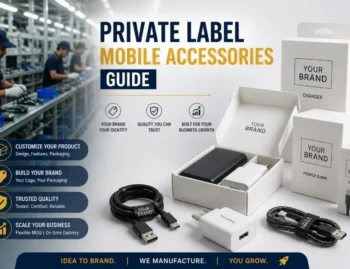
Data Cable Manufacturing for Private Label Brands
Private label manufacturing allows businesses to launch cables under their own brand without operating their own production facility.
Depending on the manufacturer’s capabilities, brands can customize elements such as:
- Cable design
- Color
- Length
- Connector combination
- Outer material
- Branding
- Packaging
This approach allows businesses to focus on branding, marketing, distribution, and customer relationships while the manufacturing partner manages production.
For new brands, it can also provide a more practical way to test products and gradually expand their product range.
Final Thoughts
The Data Cable Manufacturing Process involves multiple stages, from conductor selection and insulation to connector assembly, outer finishing, charging testing, data testing, and durability evaluation.
Although a data cable may appear simple, its internal construction has a direct impact on how reliably it performs.
For businesses, selecting an experienced USB Data Cable Supplier or manufacturing partner is therefore an important decision. Product quality, testing, customization, and production consistency should all be considered before starting a long term manufacturing relationship.
As charging technologies and data standards continue to evolve, cable manufacturers will also need to adapt their products to support new devices and performance requirements.
For brands looking to build a reliable cable portfolio, a structured manufacturing process provides the foundation for creating products that customers can use with confidence.
Also Read: Power Bank Manufacturing Process: From Battery Cells to Final Product
Frequently Asked Questions
What is the Data Cable Manufacturing Process?
The process generally includes conductor selection, insulation, internal wire arrangement, connector preparation, assembly, soldering, outer jacket application, charging and data testing, durability testing, final inspection and packaging.
Who are Data Cables Manufacturers?
Data Cables Manufacturers produce cables designed for charging, data transmission, or both. They may manufacture standard products or provide OEM and private label solutions for brands.
What should I look for in USB Cable Manufacturers?
Businesses should evaluate product quality, connector options, testing procedures, customization capabilities, production consistency and the manufacturer’s ability to scale production.
What is the role of a USB Data Cable Supplier?
A USB Data Cable Supplier provides cables according to specific product requirements. For brands, choosing a supplier with consistent quality and reliable production capabilities is important for maintaining product standards.
Can SigmaVizin manufacture customized data cables?
Yes. SigmaVizin supports businesses looking for customized and private label data cable manufacturing, including product specifications, design requirements, branding and packaging options.
How are data cables tested before reaching customers?
Depending on the product specifications, manufacturers can test charging performance, data transfer, electrical continuity, connector durability, bending resistance and overall product quality before final approval.