
A Complete Guide to Compliance, Product Safety and Manufacturing Standards in India
The mobile accessories market in India has grown rapidly over the last decade. Products such as mobile chargers, power banks, data cables, travel adapters and wireless audio devices have become an essential part of everyday life. As demand continues to grow, so does the need for products that are safe, reliable and manufactured according to recognized quality standards.
For businesses planning to launch their own mobile accessories brand, product quality is only one part of the equation. Regulatory compliance is equally important. Customers, retailers and online marketplaces increasingly expect electronic products to meet applicable safety requirements before they are introduced into the market.
This is where BIS Certification becomes an important consideration.
Whether you are developing products under your own brand or working with an OEM manufacturing partner, understanding BIS certification helps you make informed business decisions while building long-term customer confidence.
In this guide, we’ll explain what BIS certification is, why it matters for mobile accessories, and how businesses can work with manufacturing partners that understand quality and compliance requirements.
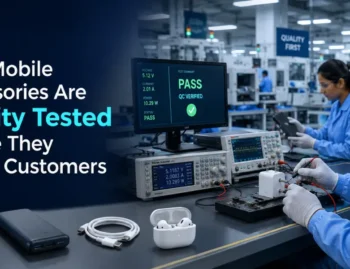
Also Read: How Mobile Accessories Are Quality Tested Before They Reach Customers
What is BIS Certification?
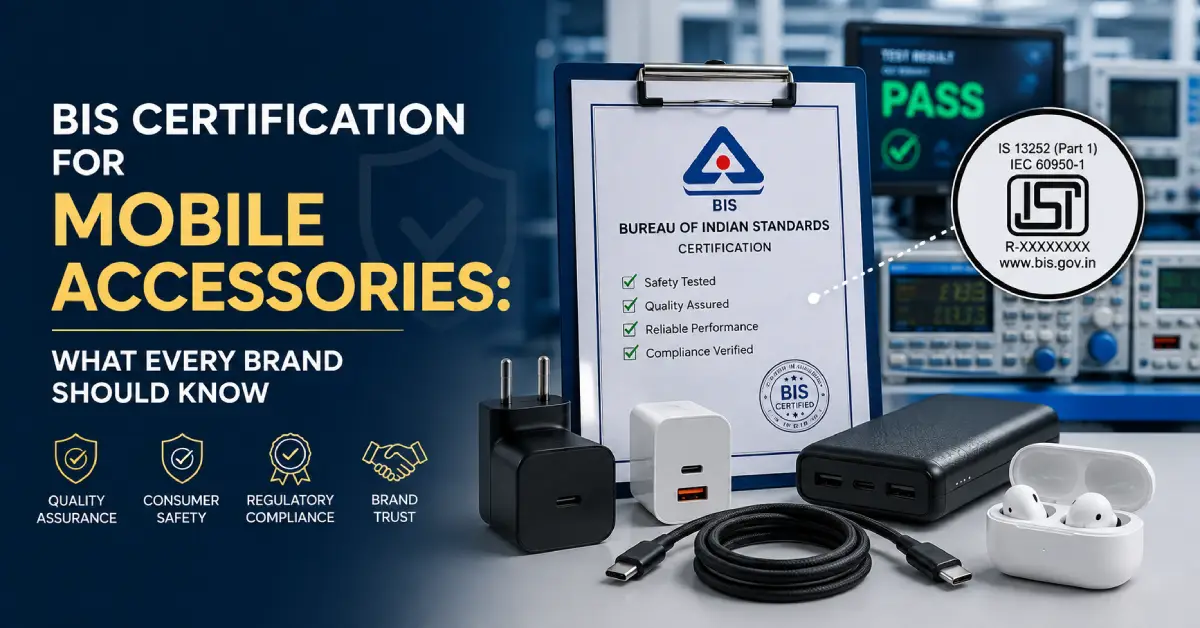
BIS stands for the Bureau of Indian Standards, India’s national standards body responsible for developing quality standards and certification systems across a wide range of industries.
For many electronic products sold in India, BIS plays an important role in establishing safety and quality requirements through applicable certification schemes.
The primary objective is to help ensure that products entering the market meet defined safety and performance standards before reaching consumers.
For businesses, BIS certification is more than a regulatory requirement. It also demonstrates a commitment to product quality and customer safety.
Why BIS Certification Matters for Mobile Accessories
Electronic accessories are used every day, often for several hours at a time. Products such as chargers and power banks handle electrical power continuously, making safety an essential consideration during design, manufacturing and testing.
When products are manufactured according to applicable quality and compliance requirements, businesses benefit in several ways.
Improved Consumer Confidence
Customers are more likely to trust products that meet recognized quality standards.
Confidence leads to:
- Better customer satisfaction
- Higher repeat purchases
- Stronger brand reputation
Better Product Safety
Quality standards encourage manufacturers to focus on areas such as:
- Electrical safety
- Heat management
- Material quality
- Product reliability
This helps reduce the risk of product failures during regular use.
Stronger Business Reputation
Businesses that prioritize compliance are often viewed as more reliable by retailers, corporate buyers, and business partners.
Over time, this contributes to stronger market credibility.
Long-Term Brand Growth
Building a successful brand requires consistency.
Products that meet quality expectations are more likely to generate positive customer experiences, helping businesses grow sustainably.
Which Mobile Accessories May Require BIS Certification?
Not every mobile accessory follows the same regulatory pathway.
The applicable requirements depend on the product category and the regulations in force at the time the product is introduced into the Indian market.
Some electronic accessories may fall under certification requirements, while others may be subject to different compliance obligations.
For this reason, businesses should always verify the latest applicable requirements before launching a product.
Products commonly associated with BIS-related compliance considerations include:
Mobile Chargers
Chargers are electrical devices that directly connect to the power supply.
Because they manage electrical power, product safety and performance standards are especially important.
Power Banks
Power banks contain rechargeable battery cells and power management circuits.
Manufacturers typically place significant emphasis on battery safety, protection systems and product testing during development.
Travel Adapters
Travel adapters designed for electrical connections may also require compliance with applicable standards depending on product design and intended use.
Other Electronic Accessories
Certain electronic products may also fall under applicable certification or regulatory requirements based on their functionality and classification.
Businesses should evaluate each product category individually instead of assuming the same requirements apply across all accessories.
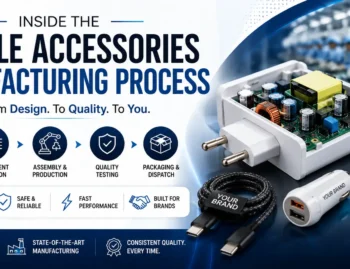
Also Read: Inside the Mobile Accessories Manufacturing Process
Understanding the BIS Certification Process
Although the certification process can vary depending on product category and applicable regulations, businesses generally follow a structured sequence before launching compliant products.
Understanding these steps helps brands prepare more effectively.
Step 1: Product Design and Development
Everything begins with product engineering.
Manufacturers first develop products according to intended technical specifications, safety requirements and applicable standards.
This stage includes:
- Circuit design
- Component selection
- Material evaluation
- Safety-focused engineering
Good product design reduces compliance challenges later in the process.
Step 2: Prototype Evaluation
Before mass production begins, prototype units are evaluated.
Engineers verify:
- Product functionality
- Charging performance
- Electrical behavior
- Thermal performance
- Mechanical design
Any required improvements are made before moving to production.
Step 3: Product Testing
Testing plays one of the most important roles in compliance.
Manufacturers typically evaluate products for:
- Electrical performance
- Temperature behavior
- Protection mechanisms
- Mechanical durability
- Functional reliability
Testing helps identify potential issues before products move toward commercial production.
Step 4: Documentation
Accurate technical documentation is an essential part of product development.
Manufacturers maintain records related to:
- Product specifications
- Design information
- Test reports
- Material details
- Manufacturing processes
Well-organized documentation simplifies future quality management and compliance activities.
Why Quality Control Supports Compliance
Compliance begins long before certification.
Manufacturers that follow disciplined quality control systems are generally better prepared to meet applicable product standards.
Instead of relying only on final inspection, quality-focused manufacturers monitor production at multiple stages.
This often includes:
- Incoming material inspection
- In-process quality checks
- Functional testing
- Safety verification
- Final product inspection
These systems help improve manufacturing consistency while reducing production defects.
For businesses, working with manufacturers that prioritize quality control creates a stronger foundation for long-term product reliability.
Common BIS Certification Mistakes Brands Should Avoid
Many businesses entering the mobile accessories market focus primarily on product design, pricing, and packaging. Compliance is often considered only after production has started, which can create unnecessary delays and additional costs.
Understanding common mistakes helps brands prepare more effectively.
Assuming Every Product Has the Same Requirements
One of the biggest misconceptions is that all mobile accessories follow identical compliance requirements.
In reality, different product categories may be governed by different standards and regulatory requirements.
Before launching any product, businesses should verify the latest applicable standards for that specific category.
Selecting a Manufacturer Based Only on Cost
Low production cost does not always translate into long-term value.
Manufacturers that prioritize quality systems, documentation and structured production often help businesses avoid costly issues later.
A reliable manufacturing partner supports both product quality and smoother compliance processes.
Ignoring Product Documentation
Proper documentation is an essential part of product development.
Maintaining organized records related to:
- Product specifications
- Component information
- Test reports
- Manufacturing processes
helps businesses manage future quality and compliance requirements more efficiently.
Skipping Product Validation
Launching products without sufficient testing increases the possibility of product failures after reaching customers.
Validation before mass production helps identify potential issues early while reducing future operational risks.
How OEM Manufacturers Support Compliance
An experienced OEM manufacturer contributes much more than production capacity.
Professional manufacturing partners establish processes that support product consistency, quality management and documentation throughout production.
These may include:
- Controlled manufacturing procedures
- Material verification
- In-process quality inspections
- Product performance testing
- Traceability systems
- Final quality evaluation
For businesses, working with an experienced OEM manufacturer simplifies product development while improving overall manufacturing reliability.
Why Businesses Should Choose Compliance-Focused Manufacturing Partners
As competition continues to increase, customers expect products that perform consistently and safely.
Manufacturers that integrate quality and compliance into daily production practices help businesses achieve:
- Better product consistency
- Reduced product returns
- Improved customer satisfaction
- Stronger retailer confidence
- Long-term brand credibility
Rather than viewing compliance as a one-time activity, successful manufacturers treat it as part of their overall quality culture.
Why SigmaVizin Prioritizes Quality and Compliance
At SigmaVizin Electronics Pvt. Ltd., manufacturing quality begins long before products reach the production line.
Every stage of the manufacturing process is designed to support consistency, reliability and continuous quality improvement.
From component selection and production planning to quality inspection and final testing, SigmaVizin follows structured manufacturing workflows that help brands build dependable mobile accessories.
As an OEM Mobile Accessories Manufacturer in India, SigmaVizin supports businesses developing products such as:
- Mobile Chargers
- Power Banks
- Data Cables
- TWS Earbuds
- Travel Adapters
- Other Consumer Electronics Accessories
Rather than focusing only on production volume, the company emphasizes disciplined manufacturing practices that help businesses maintain consistent product quality while supporting long-term brand growth.
For brands entering the Indian electronics market, working with a manufacturing partner that understands quality systems and compliance expectations can significantly improve product reliability.
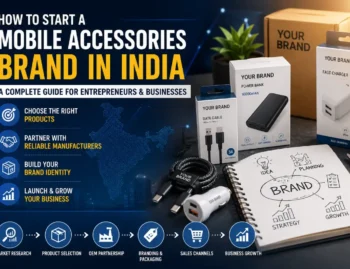
Alao Read: How to Start a Mobile Accessories Brand in India
Questions Every Brand Should Ask Before Choosing a Manufacturer
Before selecting an OEM manufacturing partner, businesses should ask practical questions about quality systems and production processes.
For example:
- How is product quality monitored during manufacturing?
- What testing procedures are followed before shipment?
- How are incoming materials inspected?
- How is production consistency maintained?
- What documentation is maintained during manufacturing?
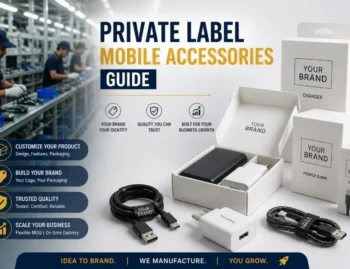
- Can products be customized for private label requirements?
- How are product improvements managed over time?
The answers often provide a clearer understanding of a manufacturer’s operational maturity than pricing alone.
The Future of Compliance in India’s Electronics Industry
India’s electronics manufacturing sector continues to grow rapidly.
With increasing consumer awareness, expanding exports and stronger quality expectations, manufacturers are investing more heavily in:
- Advanced testing laboratories
- Automated inspection systems
- Better quality management practices
- Improved traceability
- Smarter manufacturing technologies
Compliance will continue to become an important competitive advantage rather than simply a regulatory requirement.
Businesses that work with quality-focused manufacturing partners will be better positioned to compete in both domestic and international markets.
Final Thoughts
Quality, safety and compliance have become essential parts of modern electronics manufacturing.
For businesses launching mobile accessories, understanding BIS certification and broader quality requirements helps build stronger products, reduce operational risks and improve long-term customer confidence.
While product innovation remains important, sustainable growth depends equally on manufacturing discipline, quality control and compliance awareness.
Choosing a manufacturing partner that values these principles enables businesses to focus on building trusted brands in an increasingly competitive market.
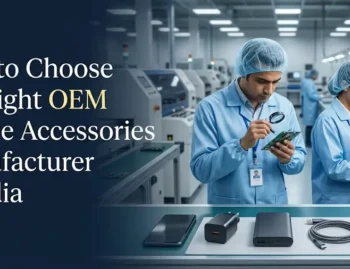
Also Read: How to Choose the Right OEM Mobile Accessories Manufacturer in India
Frequently Asked Questions
What is BIS Certification for mobile accessories?
BIS Certification is part of India’s product standards framework. Depending on the product category and applicable regulations, certain electronic products may need to comply with BIS requirements before being introduced into the Indian market.
Do all mobile accessories require BIS Certification?
Not necessarily. Compliance requirements vary depending on the product type and the regulations applicable at the time of launch. Businesses should always verify the latest requirements for their specific products.
Why is product testing important before certification?
Testing helps evaluate product safety, performance and reliability while identifying potential issues before commercial production begins.
How does SigmaVizin support quality and compliance?
SigmaVizin Electronics follows structured manufacturing processes that include material inspection, quality control, product testing and documented production workflows to support consistent manufacturing standards.
Can OEM manufacturers help businesses prepare compliant products?
Yes. Experienced OEM manufacturers often support businesses by maintaining organized production systems, documentation, and quality-focused manufacturing processes throughout product development.
Why should brands choose manufacturers that prioritize compliance?
Manufacturers with strong quality and compliance practices help brands improve product consistency, reduce returns, strengthen customer confidence and support long-term business growth.