
A Complete Guide for Brands Looking to Build Reliable and Scalable Product Lines
The mobile accessories industry in India has grown significantly over the past few years. With increasing smartphone adoption and a growing demand for products such as chargers, power banks, data cables, TWS earbuds and smart accessories, more businesses are entering this competitive market.
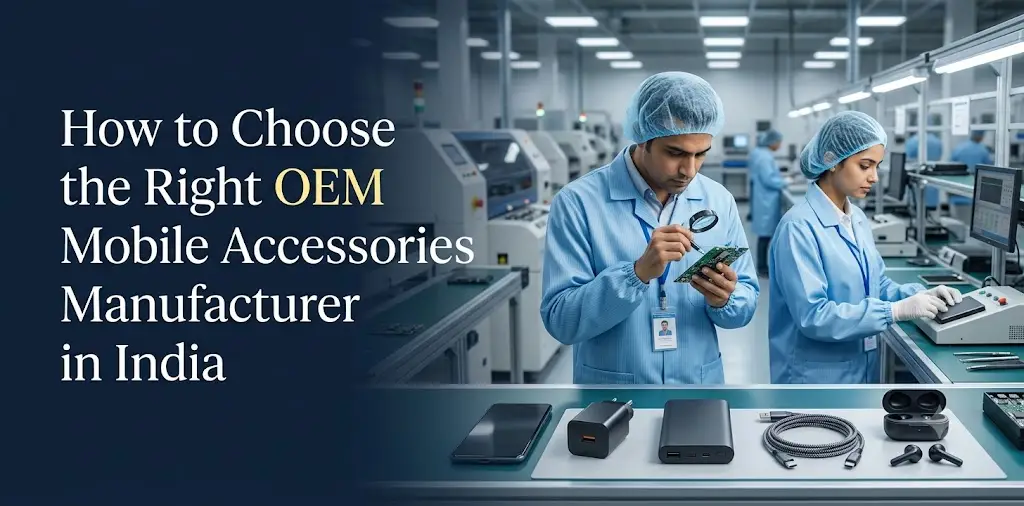
However, building a successful mobile accessories brand requires much more than choosing the right products or creating attractive packaging. One of the most important decisions a business will make is selecting the right OEM Mobile Accessories Manufacturer in India.
Your manufacturing partner directly influences product quality, consistency, production timelines, customer satisfaction and ultimately, your brand’s reputation. A reliable OEM partner helps you build products that customers trust, while the wrong manufacturing partner can lead to quality issues, delayed deliveries and increased operational costs.
Whether you are launching your first product line or expanding an existing brand, understanding how to evaluate an OEM manufacturer can help you make informed decisions that support long-term business growth.
This guide explains the key factors every business should consider before choosing an OEM manufacturing partner in India.
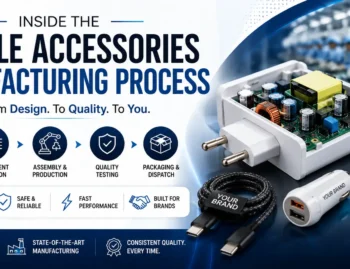
Also Read: Inside the Mobile Accessories Manufacturing Process
Why Your Choice of OEM Manufacturer Matters
Many businesses believe manufacturing begins only after an order is placed. In reality, manufacturing decisions influence every stage of a product’s lifecycle, from development and quality control to customer satisfaction and repeat purchases.
A professional OEM manufacturer does much more than produce products. They become an extension of your business, helping you maintain consistency while supporting future growth.
A reliable manufacturing partner can help you:
- Maintain consistent product quality
- Reduce production errors
- Improve delivery timelines
- Support product customization
- Scale manufacturing as demand grows
- Strengthen long-term customer trust
On the other hand, choosing an inexperienced or low-cost manufacturer without proper evaluation often results in avoidable challenges that affect both profitability and brand reputation.
Step 1: Clearly Define Your Product Requirements
Before contacting any manufacturer, businesses should have a clear understanding of what they want to build.
Many companies begin discussions with manufacturers without defining their exact product requirements. This often leads to misunderstandings, repeated revisions and longer development cycles.
Start by identifying:
- Product category
- Technical specifications
- Charging technology requirements
- Design preferences
- Packaging expectations
- Target customer segment
- Estimated order quantity
For example, if your goal is to launch premium fast chargers, your manufacturing requirements will be very different from those of a budget-oriented charging cable brand.
The clearer your requirements are, the easier it becomes to identify a manufacturer capable of meeting your expectations.
Step 2: Evaluate Manufacturing Experience
Experience plays a significant role in electronics manufacturing.
An experienced OEM Mobile Accessories Manufacturer understands production challenges, quality standards, component sourcing and industry requirements more effectively than companies with limited manufacturing expertise.
When evaluating potential manufacturers, consider questions such as:
- How long have they been manufacturing mobile accessories?
- Which product categories do they specialize in?
- Do they manufacture products in-house?
- Have they worked with established brands?
Experience often translates into better production efficiency, stronger quality systems and improved problem-solving capabilities.
Manufacturers that have successfully handled different product categories are generally better equipped to manage evolving market requirements.
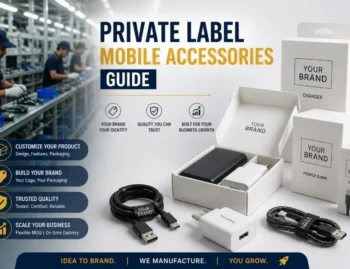
Also Read: Private Label Mobile Accessories: Complete Guide for Brands
Step 3: Assess Product Range and Manufacturing Capabilities
Not every manufacturer produces every type of mobile accessory.
Some manufacturers focus exclusively on chargers, while others specialize in power banks, cables, audio accessories or wearable devices.
Choosing a manufacturing partner with capabilities aligned to your business goals provides several advantages.
A diversified product portfolio allows brands to expand without switching manufacturing partners.
For example, if your current product line includes mobile chargers and you later decide to introduce power banks or data cables, working with a manufacturer that already produces these categories simplifies product expansion.
This creates operational efficiency while maintaining consistent quality standards across multiple product lines.
Step 4: Examine Quality Control Systems
Quality is one of the most important indicators of a professional manufacturer.
High-quality mobile accessories are not produced through inspection alone. They are built through structured quality systems implemented throughout the manufacturing process.
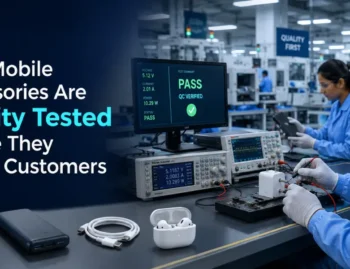
A reliable manufacturer performs inspections at multiple stages, including:
Incoming Material Inspection
Every component entering production should be checked for quality before assembly begins.
This helps prevent manufacturing defects caused by substandard materials.
In-Process Quality Checks
Quality inspections during production help identify issues before products reach the final assembly stage.
Early detection reduces waste and improves manufacturing efficiency.
Functional Testing
Finished products should undergo performance testing to verify charging efficiency, power output, and overall functionality.
Safety Testing
Products should be tested for:
- Overheating
- Short circuit protection
- Voltage stability
- Current regulation
For electronics products, safety is just as important as performance.
Businesses should always understand how manufacturers manage quality before making long-term commitments.
Step 5: Review Manufacturing Infrastructure
Modern manufacturing requires more than assembly lines.
Well-organized production facilities reflect operational discipline and consistency.
When evaluating an OEM manufacturer, businesses should observe:
- Production workflow
- Assembly systems
- Testing equipment
- Material handling
- Packaging process
- Storage practices
A structured manufacturing environment generally leads to better production accuracy and improved product consistency.
Although infrastructure alone does not guarantee quality, it often reflects the manufacturer’s overall production standards.
Step 6: Verify Product Certifications and Compliance
Electronics products must comply with various safety and regulatory standards before entering the market.
Working with manufacturers that understand certification requirements reduces business risk.
Depending on the product category, businesses may require certifications such as:
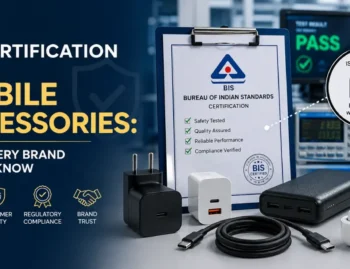
- BIS
- CE
- RoHS
- FCC (for specific export markets)
A knowledgeable manufacturer can assist brands in understanding compliance requirements while ensuring products are manufactured according to applicable standards.
Certification awareness also demonstrates that the manufacturer follows structured production and testing practices.
Step 7: Evaluate Production Capacity and Scalability
One of the biggest mistakes businesses make is selecting a manufacturer that can handle today’s order volume but struggles as demand grows.
Scalability is critical for long-term success.
Before finalizing a manufacturing partnership, businesses should evaluate:
- Monthly production capacity
- Ability to increase output
- Lead time consistency
- Workforce capability
- Supply chain stability
A manufacturer capable of scaling production allows businesses to grow without frequently changing suppliers.
This becomes especially important during seasonal demand spikes or rapid business expansion.
Also Read: OEM vs ODM Manufacturing: What Brands Need to Know Before Scaling
Step 8: Look for Product Customization and Private Label Support
Every brand wants to stand out in a competitive market. While product quality is essential, customization helps create a unique identity that customers remember.
A reliable OEM manufacturer should offer flexibility in product development rather than limiting businesses to standard designs.
Customization may include:
- Product branding
- Logo printing
- Packaging design
- Color options
- Product specifications
- User manuals
- Retail packaging
For businesses building a private label brand, these services simplify the process of launching products that reflect their own identity.
Manufacturers that support customization also help brands respond more quickly to changing market trends and customer preferences.
Step 9: Evaluate Communication and Technical Support
Successful manufacturing partnerships are built on communication.
Even the best production facility cannot deliver consistent results if communication is unclear or delayed.
Before selecting an OEM partner, businesses should evaluate:
- Response time
- Technical knowledge
- Project coordination
- Production updates
- Problem-solving approach
A manufacturer that communicates proactively can reduce misunderstandings and improve project execution.
This becomes especially important when launching new products or making design modifications.
Step 10: Compare Value Instead of Just Price
Many businesses choose manufacturers based only on the lowest quotation.
While competitive pricing is important, focusing only on cost often leads to quality issues, inconsistent production and higher long-term expenses.
Instead of asking:
“Who offers the lowest price?”
Ask:
“Who offers the best long-term value?”
A professional OEM manufacturer contributes through:
- Better quality consistency
- Lower defect rates
- Reliable delivery schedules
- Strong technical support
- Better customer satisfaction
These factors often create greater business value than small cost differences.
Common Mistakes Businesses Make When Choosing an OEM Manufacturer
Choosing the wrong manufacturing partner can delay business growth and increase operational risks.
Some of the most common mistakes include:
Choosing Only on Price
Lower production costs often come with compromises in material quality, testing, or production consistency.
Skipping Factory Evaluation
Whenever possible, businesses should understand how products are manufactured before entering long-term partnerships.
Production systems reveal far more than marketing brochures.
Ignoring Quality Control
Many businesses ask about pricing before asking about testing procedures.
Quality should always come first.
Planning Only for Current Demand
Businesses often underestimate future growth.
Selecting a scalable manufacturing partner avoids unnecessary supplier changes later.
Lack of Clear Product Documentation
Detailed product specifications reduce production errors and improve consistency.
Clear communication benefits both the brand and the manufacturer.
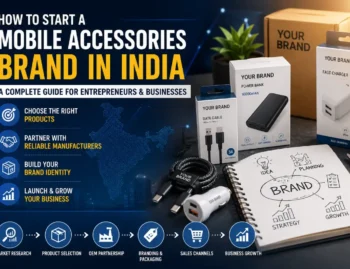
Also Read: How B2B Brands Can Start Their Own Mobile Accessories Line With OEM/ODM (Complete 2026 Guide)
Why Businesses Choose SigmaVizin as Their OEM Manufacturing Partner
Choosing an OEM manufacturing partner is about more than production capacity. Businesses need a manufacturer that understands quality expectations, supports customization and can scale with changing market demands.
SigmaVizin Electronics Pvt. Ltd. works with brands looking for dependable OEM and ODM manufacturing solutions across multiple mobile accessory categories, including mobile chargers, power banks, data cables, TWS earbuds and other electronic accessories.
The company follows structured manufacturing workflows that emphasize component quality, production consistency, and defined quality control procedures. Every stage—from material selection and assembly to testing and final inspection—is designed to support reliable product performance across production batches.
As an OEM Mobile Accessories Manufacturer in India, SigmaVizin also supports businesses with private label manufacturing, product customization, and scalable production capabilities. This enables brands to launch products efficiently while maintaining consistent quality as they grow.
Rather than focusing only on manufacturing output, SigmaVizin aims to build long-term partnerships by helping businesses develop reliable products that strengthen their brand reputation.
Questions to Ask Before Finalizing an OEM Manufacturer
Before signing a manufacturing agreement, ask these important questions:
- What quality testing procedures do you follow?
- Which certifications do your products comply with?
- Can you support private label manufacturing?
- What is your monthly production capacity?
- How do you manage quality consistency?
- What customization options are available?
- What is the average production lead time?
- Can production scale as my business grows?
The answers provide valuable insight into the manufacturer’s capabilities and long-term suitability.
Future of OEM Mobile Accessories Manufacturing in India
India is rapidly becoming one of the world’s most important electronics manufacturing destinations.
Growing domestic demand, improvements in manufacturing capabilities, and increasing investment in electronics production are creating new opportunities for brands.
Manufacturers are adopting:
- Advanced automation
- Better testing systems
- Higher safety standards
- Faster production technologies
- Sustainable manufacturing practices
Businesses that partner with experienced manufacturers today will be better positioned to benefit from this growth.
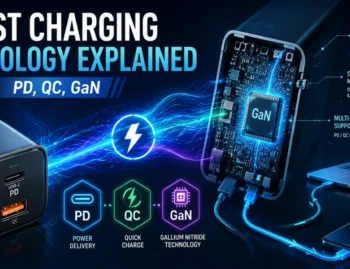
Also Read: SigmaVizin- India’s Leading Charger Manufacturing Company for Mobile, Car & Wall Chargers
Final Thoughts
Choosing the right OEM Mobile Accessories Manufacturer in India is one of the most important business decisions for any brand entering the electronics industry.
A manufacturing partner influences product quality, customer satisfaction, production efficiency and long-term business success.
Rather than focusing only on pricing, businesses should evaluate manufacturing experience, quality systems, customization capabilities, production capacity, and communication standards.
A structured evaluation process helps identify manufacturing partners capable of supporting sustainable growth.
As the mobile accessories industry continues to evolve, businesses that prioritize quality manufacturing and long-term partnerships will be better prepared to build successful and trusted brands.
Frequently Asked Questions
What is an OEM Mobile Accessories Manufacturer?
An OEM Mobile Accessories Manufacturer produces products such as mobile chargers, power banks, data cables, and TWS earbuds for businesses that sell them under their own brand name.
How do I choose the right OEM Mobile Accessories Manufacturer in India?
Evaluate manufacturing experience, quality control systems, certifications, production capacity, customization options, and communication processes before selecting a manufacturing partner.
Can OEM manufacturers provide private label mobile accessories?
Yes. Many OEM manufacturers offer private label solutions, including custom branding, packaging, and product customization to help businesses build their own brand.
Why do businesses choose SigmaVizin as an OEM manufacturing partner?
Businesses work with SigmaVizin Electronics because of its structured manufacturing processes, quality-focused production, product customization capabilities, and scalable OEM and ODM solutions for mobile accessories.
What products can be manufactured through OEM partnerships?
OEM manufacturers commonly produce mobile chargers, power banks, data cables, TWS earbuds, travel adapters, speakers, and other consumer electronics accessories.
Why is quality control important in OEM manufacturing?
Quality control ensures every product meets performance, safety, and reliability standards before reaching customers, helping brands reduce returns and build long-term trust.T