

Introduction
The Indian electronics industry has emerged as one of the fastest-growing sectors of the nation’s economy, contributing significantly to both GDP growth and technological innovation. From being a market heavily dependent on imports to gradually establishing itself as a manufacturing powerhouse, India’s journey in this sector reflects resilience, innovation, and policy-driven growth.
Today, with the backing of Digital India, Make in India, and various incentive schemes, India is not just fulfilling its domestic electronics demand but also aiming to position itself as a global electronics hub. This shift holds immense importance as electronics are at the heart of digital transformation, Industry 4.0, and the Atmanirbhar Bharat (self-reliant India) vision.
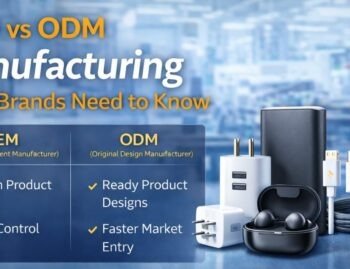
Also Read: OEM vs. ODM: Understanding the Key Differences for Your Business
Key Trends Driving the Indian Electronics Industry
1. Impact of “Digital India” and “Make in India” Initiatives
The government’s Digital India program has fueled rapid digitization, expanding demand for electronic products across urban and rural markets. Simultaneously, Make in India has encouraged both domestic and global companies to set up production units in India, reducing import dependency and creating employment opportunities.
- FDI inflows into electronics manufacturing have increased.
- India is now among the top destinations for global electronics investments.
- Export growth is steadily rising, with mobile phones and consumer electronics leading the way.
2. Boom in Smartphones and Consumer Electronics
Smartphones account for the lion’s share of India’s electronics market. With affordable data plans, rising internet penetration, and a young population, consumer electronics are witnessing explosive growth.
- India is the second-largest smartphone market in the world.
- The growing middle class is driving demand for TVs, wearables, laptops, and smart home devices.
- Brands like Samsung, Apple, Xiaomi, and homegrown players are scaling up domestic manufacturing.
3. Surge in the EV and Semiconductor Sector
The EV revolution in India has opened massive opportunities for electronics, from battery management systems to charging infrastructure. This has created urgency for developing a semiconductor ecosystem within the country.
- The government has rolled out policies to attract semiconductor fabs.
- EV adoption is accelerating due to state subsidies, infrastructure push, and climate goals.
- Semiconductors are now considered a strategic sector, given their role in national security and technology leadership.
4. The Rise of Domestic Manufacturing and the PLI Scheme
The Production-Linked Incentive (PLI) scheme for electronics has been a game-changer. It incentivizes companies based on production value, encouraging both global giants and domestic firms to scale their operations in India.
- Boosts export competitiveness.
- Encourages large-scale assembly and production.
- Creates a pathway for India to compete with China, Taiwan, and Vietnam.
5. Integration of IoT and AI
The convergence of IoT (Internet of Things) and AI (Artificial Intelligence) is reshaping consumer electronics and industrial applications.
- Smart homes, wearable devices, and connected cars are gaining traction.
- Businesses are deploying AI-driven automation in manufacturing.
- India is becoming a hub for IoT-driven innovations, especially in healthcare, agriculture, and logistics.
Also Read: How to Choose an Electronics Manufacturing Company for Your Business
Future Prospects and Challenges
Growth Opportunities
- 5G Technology Rollout: Demand for 5G-enabled devices and supporting infrastructure.
- Smart Cities Development: Surge in IoT-based solutions for energy, transport, and governance.
- Defense Electronics: Rising indigenous demand for advanced defense systems, radar, and communication equipment.
- Healthcare Technology: Growth of medical electronics, diagnostic devices, and telemedicine.
Challenges
- Dependence on Component Supply Chain
- India imports most critical components such as semiconductors, PCBs, and display units.
- Developing a domestic supply chain is crucial for long-term self-reliance.
- Lack of R&D Investment
- Only a fraction of GDP is spent on electronics R&D.
- To move up the value chain, India must focus on design and innovation, not just assembly.
- Skill Gap in Workforce
- The industry requires engineers, technicians, and specialists in semiconductor design, robotics, and AI.
- Bridging the skill gap through vocational training, reskilling programs, and academia-industry collaboration is essential.
Government Policies and Initiatives
1. Semi-con India Mission
The government launched the ₹76,000 crore Semicon India Program to establish a complete semiconductor ecosystem in India. The mission covers:
- Semiconductor fabrication plants (fabs).
- Assembly, testing, marking, and packaging (ATMP) units.
- Design-linked incentives for startups and innovators.
2. Design-Linked Incentive (DLI) Scheme
The DLI scheme provides financial incentives to domestic companies for chip design and innovation. It focuses on:
- Encouraging startups in semiconductor design.
- Building IP ownership in India.
- Creating a strong talent pool in chip design.
SigmaVizin: Driving India’s Electronics Future
As India marches towards becoming a global electronics hub, companies like SigmaVizin Electronics Pvt. Ltd. are playing a pivotal role.
- Focus Areas: Mobile accessories, IoT-enabled devices, and consumer electronics.
- Commitment to Innovation: Leveraging R&D, custom OEM/ODM solutions, and modern manufacturing capabilities.
- Contribution to Atmanirbhar Bharat: By delivering high-quality, Made in India products, SigmaVizin supports the nation’s vision of self-reliance in electronics manufacturing.
SigmaVizin’s dedication to quality, customization, and technological advancement reflects the new wave of Indian electronics companies poised to compete globally.
Conclusion
The future of the Indian electronics industry is bright, driven by government support, rising domestic demand, and global companies recognizing India as a manufacturing destination. While challenges remain—such as building a self-sufficient supply chain, investing in R&D, and bridging the skill gap—the momentum is undeniable.
With the right mix of policy, innovation, and industry collaboration, India is on its way to becoming not just a global manufacturing hub but also an innovation powerhouse in electronics. This transformation aligns with the Atmanirbhar Bharat vision, ensuring India’s leadership in the digital and industrial revolution of the future.